F2L Recognition
Possible sign
They finish one pair, then pause while searching for the next one.
The questionIs the problem execution — or simply finding pieces quickly enough?
Speedcubing coaching
They practise.
They watch tutorials.
They learn more algorithms.
But eventually the timer stops moving.
The problem is not always effort. Sometimes the problem is that nobody has identified what is actually slowing the solve down.
Private 1-on-1 online speedcubing coaching.
Two children with the same solve time can be slow for completely different reasons.
A plateau is often a diagnosis problem before it is a drilling problem.
Diagnosis before drills.
Before deciding what a student should practise, first identify what is actually costing time.
But still no clear answer to:
“What should my child actually work on next?”
Practice is most useful when it targets a specific problem. Without that diagnosis, students can spend a lot of time improving things that were never the main bottleneck.
A solve time is only the final number. The useful information is what happened before the timer stopped.
Possible sign
They finish one pair, then pause while searching for the next one.
The questionIs the problem execution — or simply finding pieces quickly enough?
Possible sign
The solve contains frequent rotations and regrips.
The questionAre unnecessary movements interrupting the flow of the solve?
Possible sign
The student does not begin tracking the next pair until the current one is completely finished.
The questionCan they start seeing what comes next before the current step ends?
Possible sign
The student knows what to do, but uses more moves than necessary.
The questionCould the same pair or case be solved more efficiently?
Possible sign
OLL or PLL algorithms are known, but there is a long pause before execution.
The questionIs the algorithm slow — or is recognising the case slow?
Possible sign
The student turns quickly but has frequent lockups, regrips or awkward finger movements.
The questionIs faster turning actually producing a faster solve?
Possible sign
Some solves are much faster than the average.
The questionWhat changes between the good solves and the ordinary ones?
A parent can see the timer. A coach should be able to see the solve behind the timer.
The first job of coaching is not to assign more practice. It is to identify which part of the solve deserves attention first.
Cube Confidence Club provides private one-on-one online speedcubing coaching built around the student’s actual starting point. Not every student follows the same CFOP curriculum — priorities differ depending on the solver.
Identify the main bottleneck.
Introduce the technique or idea that addresses it.
Train it deliberately.
Review mistakes and inefficient habits.
Bring the new skill back into full solves.
Apply it consistently under timed solving.
The 12-week Mastery Program is structured, but the exact priorities depend on your child’s current level. The six-stage method describes how an individual skill is improved. The five-phase architecture describes the broader journey through the program.
Understand
Build
Practise
Accelerate
Perform
The focus is on technique, consistency, efficient practice and measurable checkpoints — building confidence through clear progression. No specific solve time is promised; goals are agreed once we know where your child is starting.
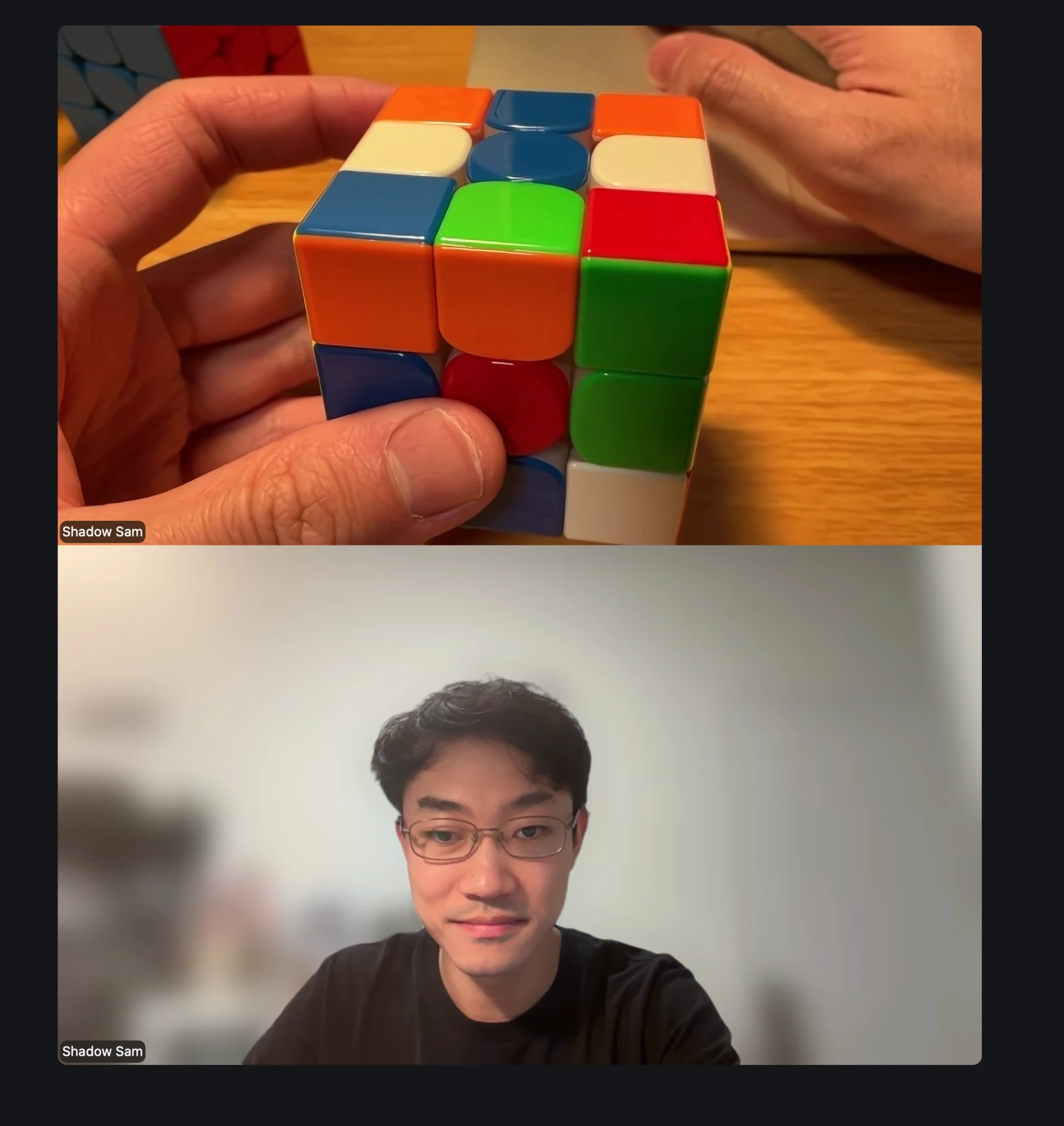
Once the bottleneck is clear, practice has a purpose.
If your child is ready to move beyond random drills and build a more deliberate approach to speedcubing, the next step is a conversation about where they are now.